
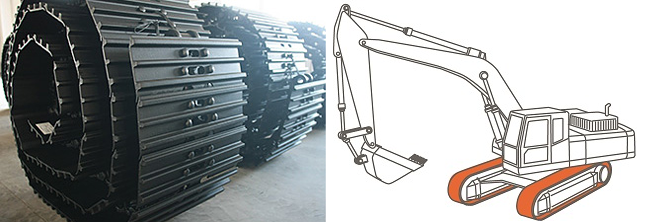
Construction machinery vehicles come in two types: those that run on tires like automobiles, and those that run on steel belts. The steel belts used in the latter are called "track." Compared to tires, track have a larger contact area with the ground, and the weight applied per unit area (ground pressure) can be made very small. This prevents the vehicle from sinking into wet or rough terrain, ensuring high off-road capability. track come in two types: steel and rubber.

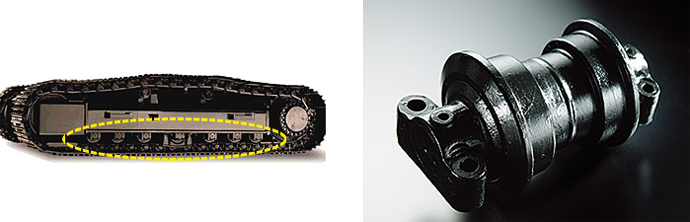
Rollers are cylindrical parts assembled inside the track that are strong enough to support the entire body weight of the construction machine. It also serves as a guide for the track to drive. There are two types: "carrier rollers" mounted on the top of the track and "track rollers" mounted on the bottom.

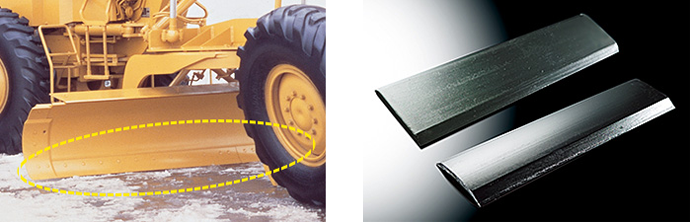
cutting edge materials is a component attached to the tip of the bucket of construction machinery used for road paving, crushing stone, snow removal, and livestock farming. Various types are available depending on the intended use.


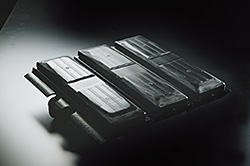
City Pad is a rubber component developed to combine the high durability and off-road capability of steel track with the road protection and low noise properties of rubber track. By attaching it to steel track, it prevents scratches on paved roads and concrete, and significantly reduces noise and vibration during operation. With City Pad installed, track become capable of handling a wide range of work environments, from demanding work on unpaved roads to delicate environments such as urban areas, factories, and facility grounds.
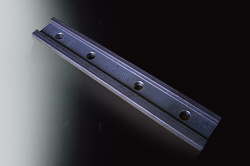
joint plate is a component used to connect railway rails (tracks).
Two joint plate are placed together at the rail joints and fastened with bolts and nuts to secure the rails.
